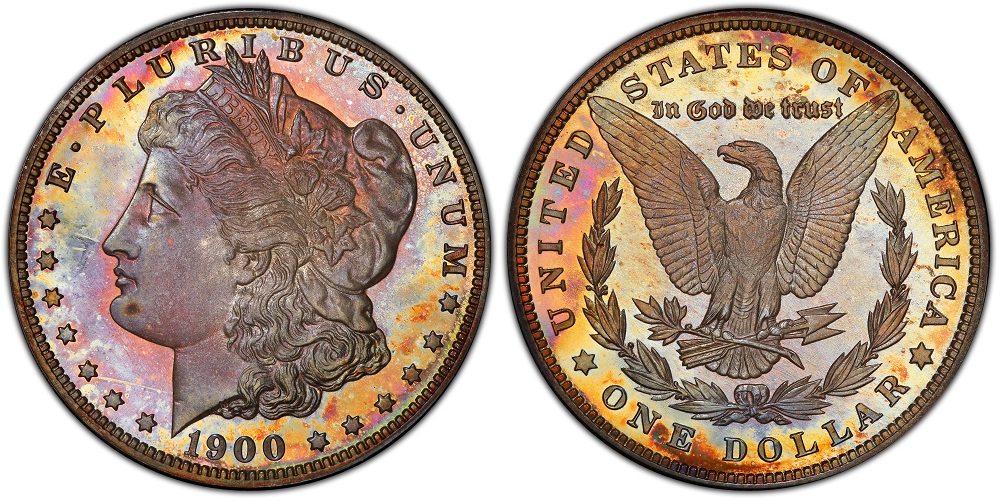
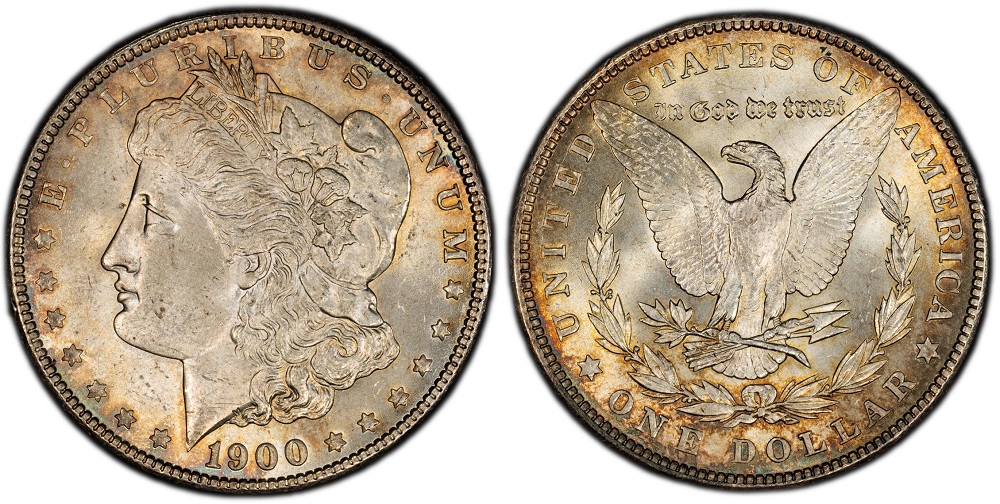
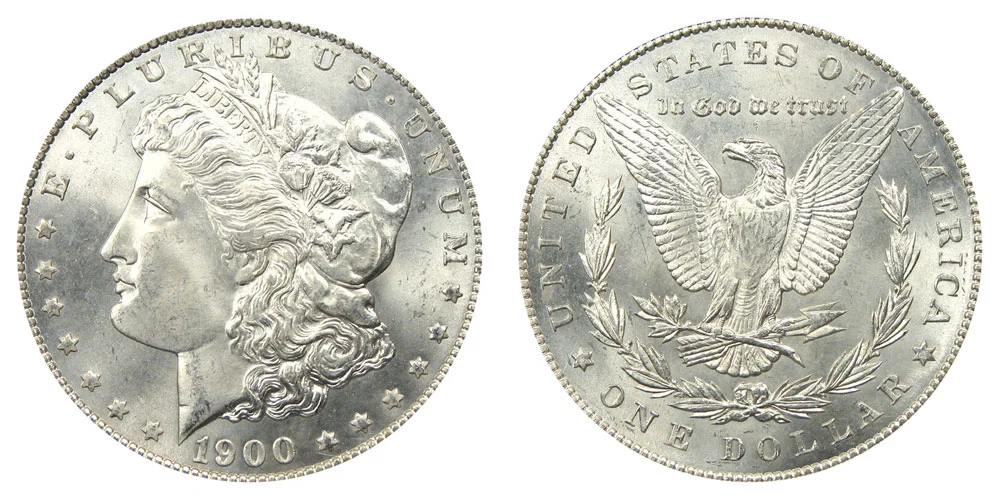
One 1900 Morgan silver dollar sold for $67,563 at auction. Most circulated examples start near $34–$55 — but the right mint mark, surface quality, or the famous O/CC overmintmark variety can multiply value by 10×, 50×, or more. Use the free tools below to find out exactly what yours is worth.
Select your coin's mint mark, condition, and any known varieties below to get an instant value estimate.
If you're not sure about your coin's mint mark or condition yet, there's a 1900 Silver Dollar Coin Value Checker tool that lets you upload a photo and get an AI-assisted identification before entering details above.
Not sure of the exact grade or variety? Describe what you see and our analyzer will identify likely varieties and value ranges.
It takes under 60 seconds — just pick your mint mark, grade, and any known variety. You might be holding hundreds more than you think.
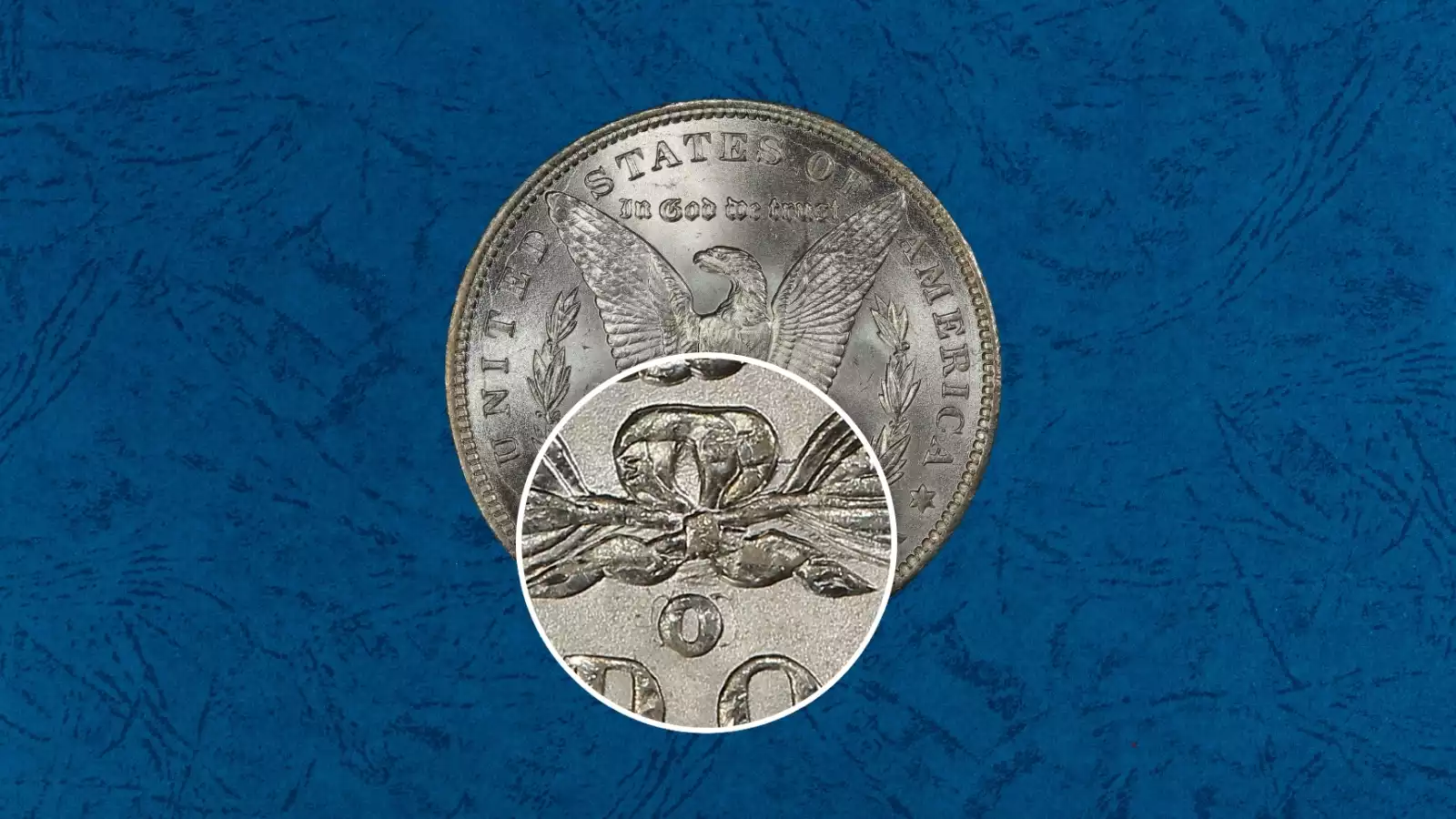
Calculate My Coin's Value →The 1900-O/CC is one of the most famous Morgan dollar varieties. Use this checker to see if your O-mint coin has the CC remnants — and what it means for value.
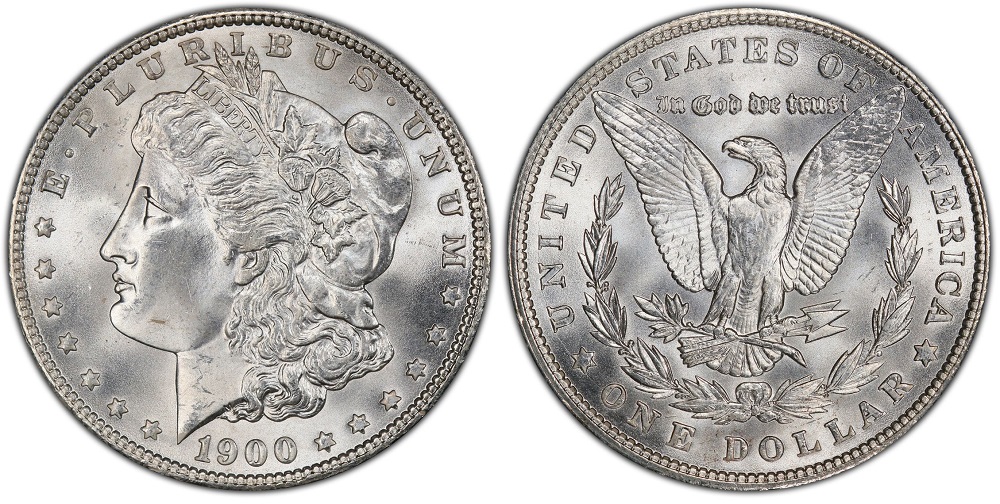
The mint mark area shows a clean, round letter 'O' with smooth sides. No additional curves, ledges, or letter remnants visible even under 10× magnification. The fields around the mint mark are flat and uninterrupted. Value in circulated grades: ~$34–$55. In MS-65: around $220.
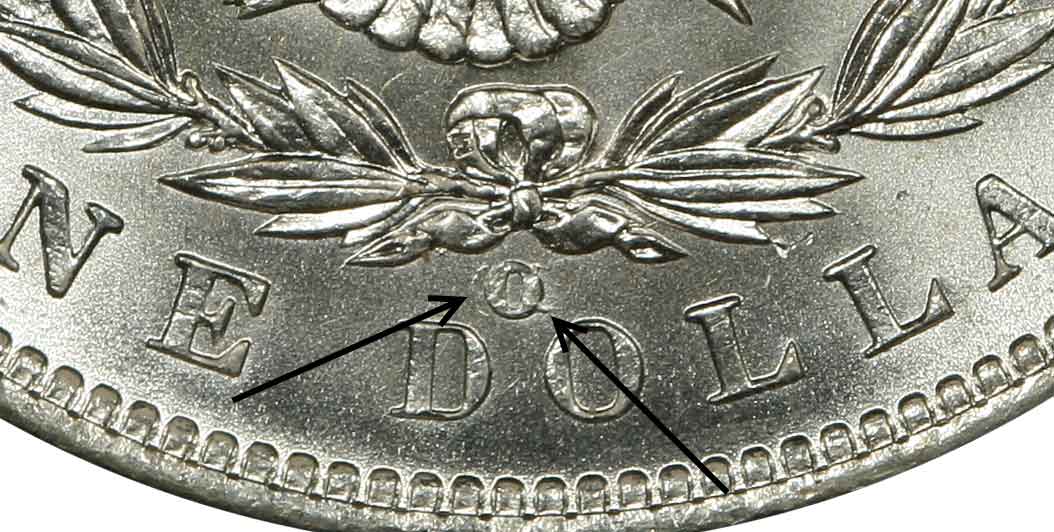
The 'O' has visible curved remnants on its left and right sides — the outer arcs of two 'C' letters pressing through. Under 5–10× magnification, both curves of the 'CC' are identifiable. Multiple VAM designations (7, 8, 9, 10, 11, 12) — VAMs 10–12 show the clearest CC. Value in circulated grades: ~$65–$175. In MS-65: around $2,800.
The table below covers the five main 1900 Morgan dollar varieties across all major condition tiers. For a thorough step-by-step in-depth 1900 Morgan dollar identification walkthrough, see the linked reference guide for full photo examples and attribution notes.
| Variety | Worn (G–F) | Circulated (EF–AU) | Uncirculated (MS-60–63) | Gem MS (MS-64–65+) |
|---|---|---|---|---|
| 1900-P (No MM) | $34 – $40 | $41 – $55 | $87 – $95 | $160 – $245+ |
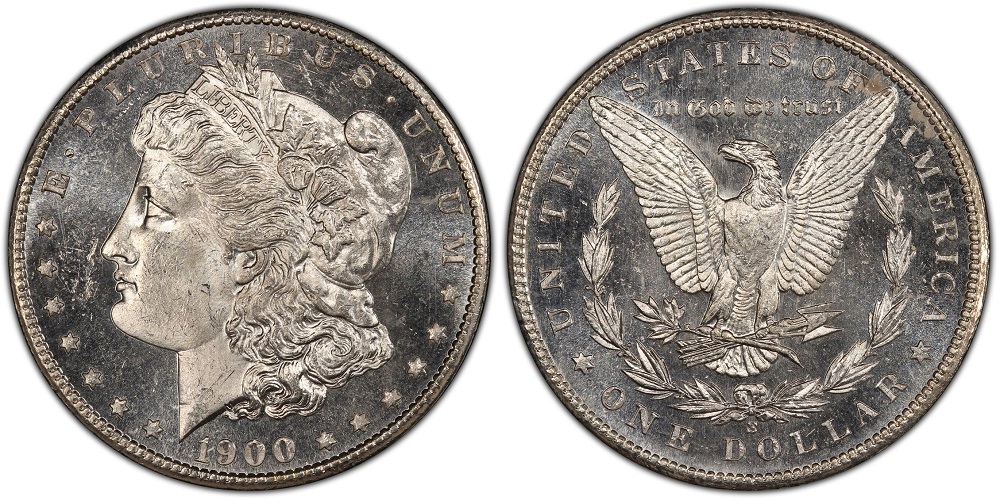
| 1900-P DMPL | $46 – $100 | $330 – $540 | $690 – $1,200 | $2,500 – $57,500+ |
| 1900-O/CC ⭐ | $65 – $95 | $175 – $240 | $585 – $1,000 | $1,485 – $40,000+ |
| 1900-O (Plain) | $34 – $40 | $41 – $55 | $87 – $95 | $130 – $220+ |
| 1900 Proof 🔴 | — | — | — | $2,020 – $78,200+ |
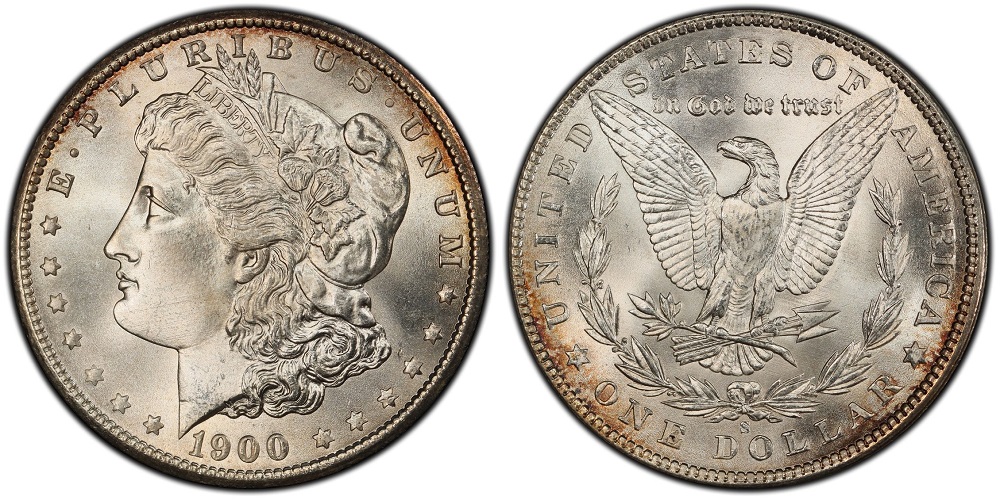
| 1900-S | $34 – $50 | $48 – $170 | $90 – $440 | $440 – $34,500+ |
⭐ = Signature O/CC variety (Top 100 VAM) 🔴 = Rarest issue (912 proofs struck)
Values are market ranges based on PCGS auction data and current market pricing. Individual coins vary.
🪙 CoinKnow gives you a fast on-the-go way to cross-check your 1900 Morgan against a current price database right from your phone — a coin identifier and value app.
Jump to the section most useful to you:
The 1900 Morgan dollar has five collector-priority varieties spanning overmintmarks, doubled dies, and die-state curiosities. Each of the following cards covers what the variety is, how to spot it without specialized equipment, and what the current market pays. Values reflect certified examples; raw coins command less.
When the Carson City Mint closed in 1893, leftover reverse dies with "CC" punch marks were eventually returned to Philadelphia. In 1900, the New Orleans Mint received some of these dies and, rather than retire them, workers punched an "O" directly over the existing "CC." The result is one of the most dramatically visible overmintmarks in the entire Morgan dollar series.
To identify it, flip to the reverse and examine the mint mark under 5× or stronger magnification. The outer curves of both "C" letters press out from behind the "O" on its left and right flanks — not random die polish lines, but distinct, symmetrical curves. VAM designations 7 through 12 are all recognized O/CC varieties, with VAMs 10, 11, and 12 showing the sharpest, clearest remnants of the underlying "CC."
Collector demand for the O/CC is driven both by its dramatic visual story and its Top 100 VAM status. Thousands of examples have been certified by PCGS and NGC, making it accessible to general collectors — but gem-grade examples are genuinely rare and command steep premiums. The MS-67+ example sold by Legend Rare Coin Auctions in October 2015 (PCGS #7268) brought $52,875, confirming the ceiling for superb gems.
Deep Mirror Prooflike coins result from being struck very early in a die's working life, when the polished die faces impart glass-like mirror fields and satiny, frosted raised devices. These are regular business-strike coins — not proofs — but their dramatic visual contrast rivals collector proof coins at a fraction of the cost to produce at the mint.
To identify DMPL surfaces, hold the coin under a single bright light source and tilt it to about 45°. The flat fields (background) should reflect the light source as a perfect mirror with zero cloudiness, while the eagle, Liberty's portrait, and lettering appear distinctly frosty or matte by contrast. The relief separation must be clearly visible to earn DMPL attribution from PCGS or NGC — "PL" (Prooflike) is the lesser designation for coins with moderate reflectivity.
The 1900 Philadelphia DMPL is the top record-holder for this entire date: one MS-65+ DMPL example sold for $67,563 at Legend Rare Coin Auctions in April 2021, setting the current all-time auction record for any 1900 Morgan dollar. Even lower-grade DMPL examples command multiples over equivalent standard coins — an EF-40 DMPL can bring $330–$540 versus $41–$55 for the same grade in regular finish.
With only 3,540,000 coins struck, the San Francisco Mint produced far fewer 1900 Morgan dollars than either Philadelphia (8.83M) or New Orleans (12.59M). This lower mintage translates directly into scarcity in high grades — the 1900-S is meaningfully harder to find in MS-64 and above than its counterpart issues, and gem examples (MS-65+) are genuinely scarce.
San Francisco coins from this era are also known for occasionally weak strikes in the eagle's breast feathers and Liberty's hair detail above the ear — a mint characteristic rather than wear. Examine the hair strands above the ear carefully: slight flatness from a soft die is different from worn flat metal. Original luster should be present all the way through even in strike-weak areas. The VAM-5A (near date, high mint mark, die break) is the most popular certified San Francisco variety from this year.
The 1900-S held a top PCGS auction record of $48,875 for an MS-67 (Heritage Auctions, April 2007), confirming that top-pop examples draw serious competition. Circulated 1900-S coins command a premium over Philadelphia and New Orleans in EF–AU grades, where the coin's lower original mintage begins to assert itself in actual market availability.
The VAM-16 is a Hot 50 VAM variety from the Philadelphia Mint, nicknamed "Two Olives" for its distinctive reverse characteristic: an extra faint "ghost" olive is visible to the right of the main olive cluster on the eagle's branch. The variety also shows doubling on the lowest arrowhead and on the lower edge of the eagle's left wing — subtle but confirmable under magnification.
Advanced die states (VAM-16A) add a further diagnostic: impressions of the digits "900" visible in the denticle gaps below the date on the obverse. This happens when the die was used until it deteriorated enough that the date numerals began impressing into adjacent denticle areas. A loupe focused on the denticles directly below the "900" of the date reveals curved line impressions corresponding to each numeral.
While the VAM-16 doesn't command the premium of the O/CC, it's a genuine Hot 50 recognition and earns premiums of $50–$100 in average Mint State — with the MS-67 auction record reaching $2,640 according to published PCGS auction price data. It's also a gateway VAM for collectors new to the hobby, since the ghost olive is visible under low magnification and doesn't require specialized die-state expertise.
The Philadelphia Mint struck just 912 Proof Morgan dollars in 1900, making this the legitimately rare issue in the entire date's lineup. Proof coins were made specifically for collectors using specially prepared, highly polished dies and carefully selected planchets, producing coins with sharper detail, more pronounced cameo contrast, and deeper mirror fields than even the finest DMPL business strikes.
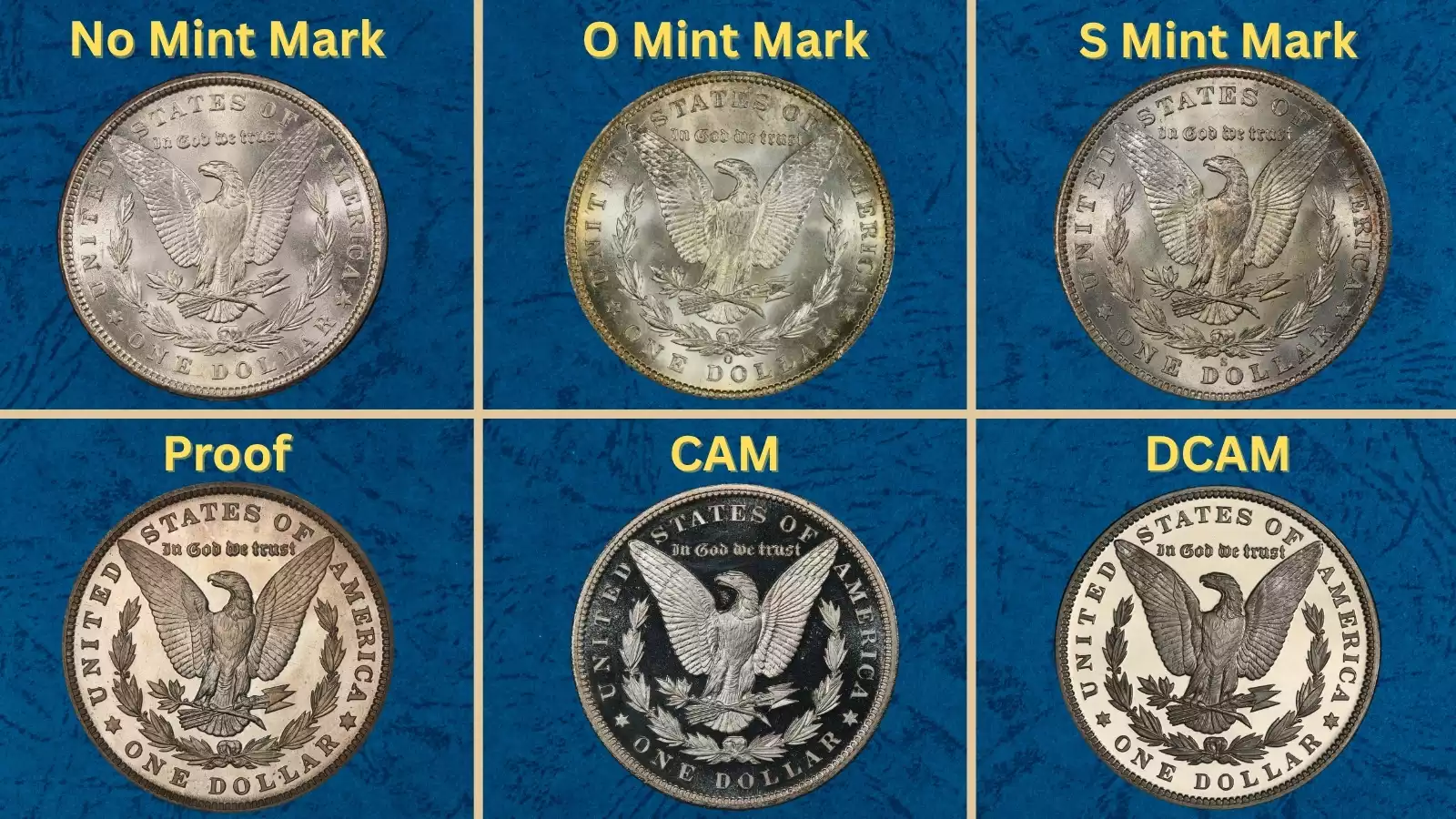
Three sub-designations exist within the 1900 Proof population: standard Proof, Cameo (CAM, with frosted devices on at least one side), and Deep Cameo (DCAM, with full frost-to-mirror contrast on both sides). DCAM examples are the most valuable, as the estimated 15 surviving DCAM-quality coins represent fewer than 2% of the original 912 struck. CAM survivors number approximately 60, and standard Proofs approximately 675 — still a small population by any measure.
Proof Morgan dollars require authentication from PCGS or NGC; altered business-strike coins with polished fields are sometimes passed off as proofs to inexperienced buyers. Genuine proofs show fully squared rims, complete mirror fields edge-to-edge, and perfect die alignment on both sides — characteristics impossible to replicate by polishing a business strike. The DCAM auction record reaches $78,200 per published PCGS-related pricing data, with a PR67DCAM bringing $52,875 at auction.
Run it through the calculator to get an instant value estimate based on your specific mint mark, condition, and variety combination.
Calculate My Coin's Value →
Three circulation mints and one proof issue make up the 1900 Morgan dollar family. New Orleans led production by a wide margin, while San Francisco — with the lowest mintage — now commands a premium in high grades. The 1918 Pittman Act authorized the melting of up to 350 million silver dollars to export silver to Britain during World War I, and millions of 1900-dated coins were lost in that melting. The estimated 10% survival rate accounts for this.
| Mint | Mint Mark | Original Mintage | Est. Survivors | Est. Survival Rate |
|---|---|---|---|---|
| Philadelphia | None | 8,830,000 | ~883,000 | ~10% |
| New Orleans | O (or O/CC) | 12,590,000 | ~1,259,000 | ~10% |
| San Francisco | S | 3,540,000 | ~354,000 | ~10% |
| Philadelphia (Proof) | None | 912 | ~675 (Proof), ~60 (CAM), ~15 (DCAM) | ~74% |
| Combined Total | 24,961,912 | ~2,496,000+ | ~10% | |
Morgan dollars are among the easiest US coins to grade thanks to their large size and clear high points. Follow the steps below to determine your coin's condition tier.
Heavy wear throughout. Liberty's facial features flat; hair above the ear shows only outline. Eagle's breast feathers are smooth. Date and lettering fully readable. Rim complete. Still contains about 0.77 troy oz of silver — the metal value underpins the price floor.
Light to moderate wear on hair above the ear, cheek, cotton leaves, and eagle's breast. In AU-55/58, only faint friction on the very highest points. Original luster survives in protected areas (under chin, between feathers). Eye appeal improves sharply as grade rises through this range.
No wear — coin retains complete original mint luster. Contact marks (bag marks) from storage in canvas Treasury bags are present and may be distracting. MS-60 shows heavy bag marks; MS-63 has noticeably fewer and lighter marks. Check Liberty's cheek and the left obverse field for mark density.
Full attractive luster, sharp strike, and only light scattered marks — none in prime focal areas (cheek, left obverse field, eagle's breast). MS-65 is the "Gem" threshold. Value accelerates sharply from MS-64 to MS-65 and again from MS-65 to MS-66/67. DMPL designation in gem grades creates an entirely separate premium tier.
📱 CoinKnow lets you snap a photo and compare your coin against graded reference examples from a curated database — a coin identifier and value app.
The right selling venue depends on your coin's grade and variety. Rare or high-grade specimens belong at auction; common circulated examples sell fastest on eBay or to a local shop.
The world's largest numismatic auction house. Best for coins graded MS-65+, DMPL examples, the O/CC in gem grade, or Proof issues. Heritage's deep collector network consistently achieves strong prices. Expect a seller's commission of around 10–15%. Submit a minimum of 4–6 weeks before a major sale. Particularly effective for Top 100 VAM designations.
The largest secondary market for mid-grade Morgan dollars (VF through MS-63). Check recently sold prices for 1900 Morgan dollars on eBay to see what comparable examples actually sold for before pricing your listing. Certified coins in PCGS or NGC holders sell for significantly more than raw equivalents. Best for coins worth $50–$300.
Fast and convenient — a local dealer will offer immediate payment. Expect to receive roughly 70–80% of retail for circulated examples and somewhat less for common uncirculated coins. Dealers must build in a profit margin. For common worn 1900 Morgans, this is often the most practical option. Bring multiple dealers' offers before accepting — prices vary significantly between shops.
Active community of collectors who buy and sell directly at fair market prices with no auction fees. Best for coins in the $40–$150 range where auction fees would eat too much of the value. Post high-quality photos showing both sides and the mint mark clearly. Verified sellers with established feedback history get better results. Community members often recognize VAM varieties and will pay appropriately.
A circulated 1900 Morgan silver dollar from Philadelphia or New Orleans is worth around $34–$55 depending on wear. Uncirculated examples start near $87–$95 at MS-60, rising to around $245 at MS-65. The San Francisco issue commands more — roughly $90–$440+ in MS grades. Rare varieties like the O/CC overmintmark or deep mirror prooflike (DMPL) surfaces can push values into the thousands.
The most valuable 1900 silver dollar on record sold for $67,563 — a Philadelphia-mint example graded MS-65+ DMPL (deep mirror prooflike) at Legend Rare Coin Auctions in 2021. Close behind is the 1900-O/CC variety in MS-67+ which brought $52,875 at Legend Rare Coin Auctions in 2015. Top-grade Proof examples with cameo contrast also exceed $48,000.
The 1900-O/CC is an overmintmark variety where the New Orleans Mint punched an 'O' mint mark directly over a leftover Carson City 'CC' reverse die. Remnants of both 'C' letters remain visible on either side of the 'O' under low magnification. It's a Top 100 VAM and one of the most popular Morgan dollar varieties, with thousands certified by PCGS and NGC across multiple VAM designations.
On Morgan dollars, the mint mark is on the reverse (back) of the coin, just above the 'O' in 'DOLLAR,' below the tip of the eagle's tail feathers and above the bow of the laurel wreath. Philadelphia-minted coins carry no mint mark. New Orleans issues show an 'O,' San Francisco shows an 'S,' and the rare O/CC variety shows an 'O' with 'CC' remnants visible underneath.
Three mints produced 1900 Morgan dollars for circulation: Philadelphia struck 8,830,000, New Orleans struck 12,590,000, and San Francisco struck 3,540,000 — a combined total of nearly 25 million coins. The Philadelphia Mint also produced just 912 Proof examples for collectors. Despite the large original mintages, estimated survival rates are around 10%, as millions were melted under the 1918 Pittman Act.
In circulated grades, the 1900 Morgan dollar is common — PCGS estimates hundreds of thousands of Mint State examples survive. However, specific varieties tell a different story. The 1900-O/CC is highly sought, and DMPL-surface coins in gem grades are genuinely scarce. The 1900-S in MS-65 or better is scarcer than Philadelphia or New Orleans, and the 912-coin Proof issue is legitimately rare.
DMPL stands for Deep Mirror Prooflike. These coins were struck early in a die's life when the die faces were highly polished, leaving mirror-like fields and frosty raised devices that create dramatic contrast. DMPL coins are a subset of regular business strikes — not proofs — but they command enormous premiums. A 1900 Philadelphia DMPL in MS-65+ sold for $67,563, versus roughly $245 for a standard MS-65 of the same date.
Check the high points: Liberty's hair above the ear, the cheek, cotton leaves in the hairband, and on the reverse the eagle's breast, wing edges, and talons. If these areas show flat, worn metal with no luster, it's circulated. If full original mint luster wraps the entire coin with no trace of wear but some bag marks, it's Mint State. Grade within MS by counting and evaluating distracting contact marks in prime focal areas.
The 1900 VAM-16, nicknamed the 'Two Olives' variety, is a Hot 50 VAM featuring an extra 'ghost' olive visible to the right of the normal olive cluster on the reverse eagle's branch. Some die states (VAM-16A) also show impressions of '900' pressed into the denticles below the obverse date. It's a Philadelphia-mint variety and carries a modest premium of $50–$100 over a standard 1900 in comparable Mint State condition.
Never clean a 1900 Morgan silver dollar. Cleaning — whether with polish, chemicals, or even gentle rubbing — permanently removes the original mint luster and surface metal, resulting in a 'details' or 'cleaned' grade from PCGS or NGC. A cleaned coin sells for a fraction of an uncleaned example of identical wear. Even heavily toned or darkened examples are worth more with original surfaces than cleaned ones.
The free calculator takes under 60 seconds. Just pick your mint mark, condition, and variety — and get an instant value estimate.
Use the Free Calculator →